A court with consequences
The Bet Din is the community’s rabbinic court. Its sittings bring judges together to hear disputes and communal questions. Cases range from commercial agreements and dowries to captivity and other responsibilities. The parties and the ruling matter as well as the quality of the argument.
Prepare the bench
Qualified judges and relevant mastered sources improve the court’s resources. A book on a communal shelf and a judge who knows how to use it are different advantages. Council preparation, institutional facilities, and leadership style can influence the court’s timing or performance.
Convene a sitting when the decision’s requirements are met. Ordinary cooldowns and the point at which the court is overdue are distinct. Recent development makes scholarly leadership able to hold sittings more frequently and revises the Dayyan’s preparation task; use your build’s tooltip for the exact timing.
Hear and decide
Read the dispute, evaluate the available arguments, and consult the native outcome preview. Cite relevant sources when offered. A stronger case can change the probabilities without guaranteeing every desired result. Some bespoke cases also carry particular consequences beyond the general court result.
Argue and watch the vote
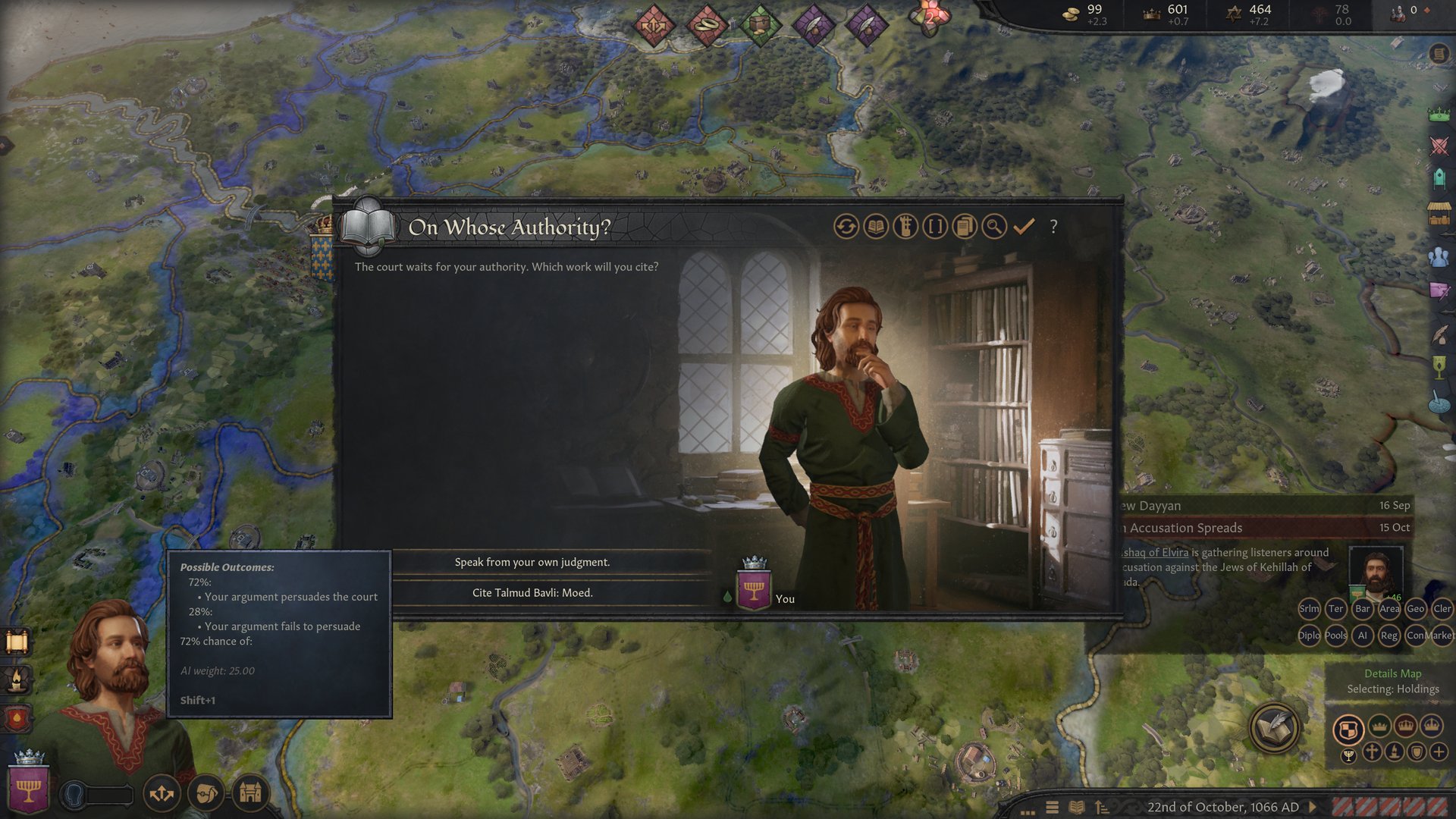
Since 0.2.0, you choose an argument and a source for each case. You can speak from your own judgment, or cite a work you have mastered. The option tooltip shows the odds. Each judge then votes, and the ruling shows who was persuaded.
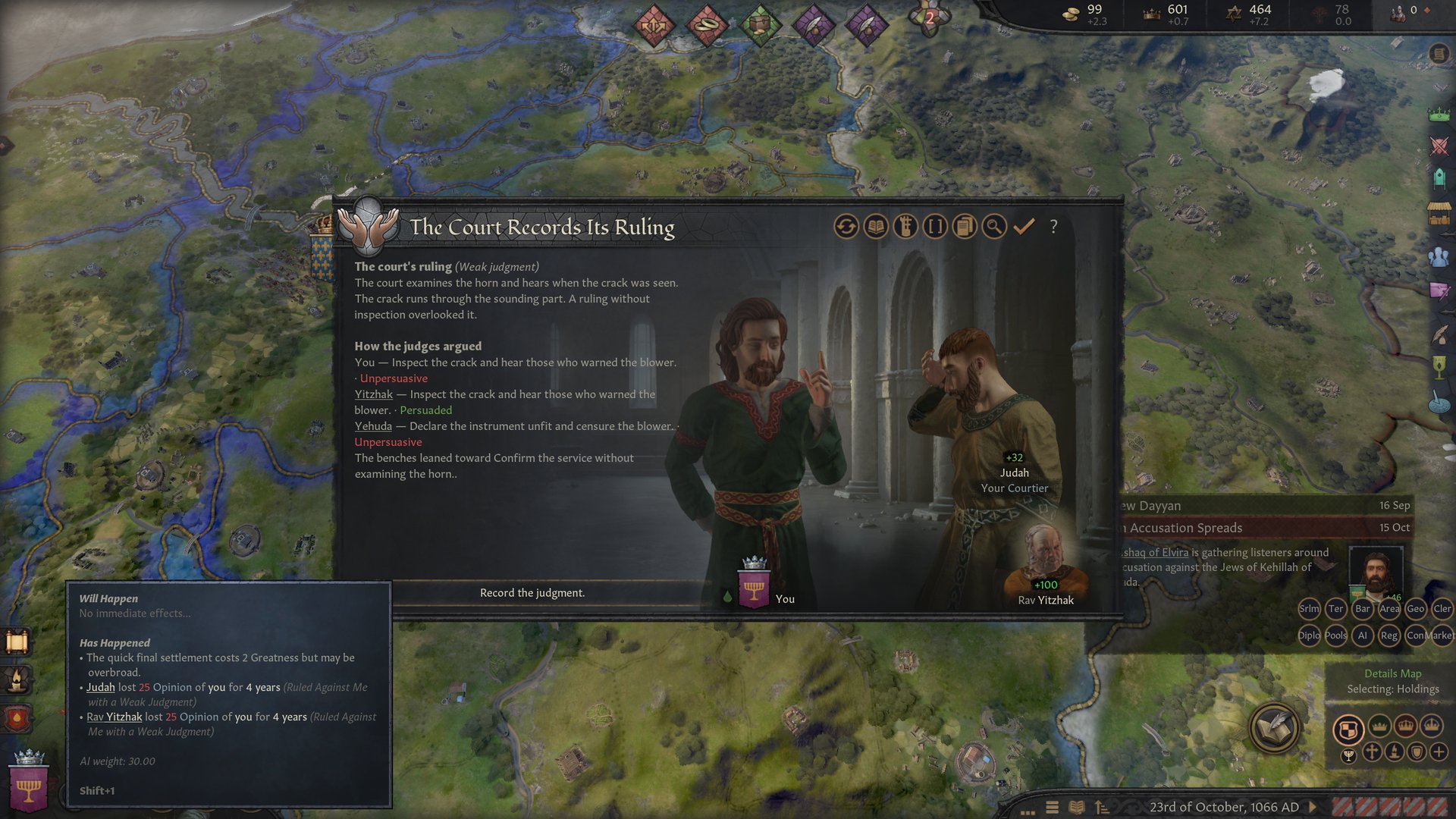
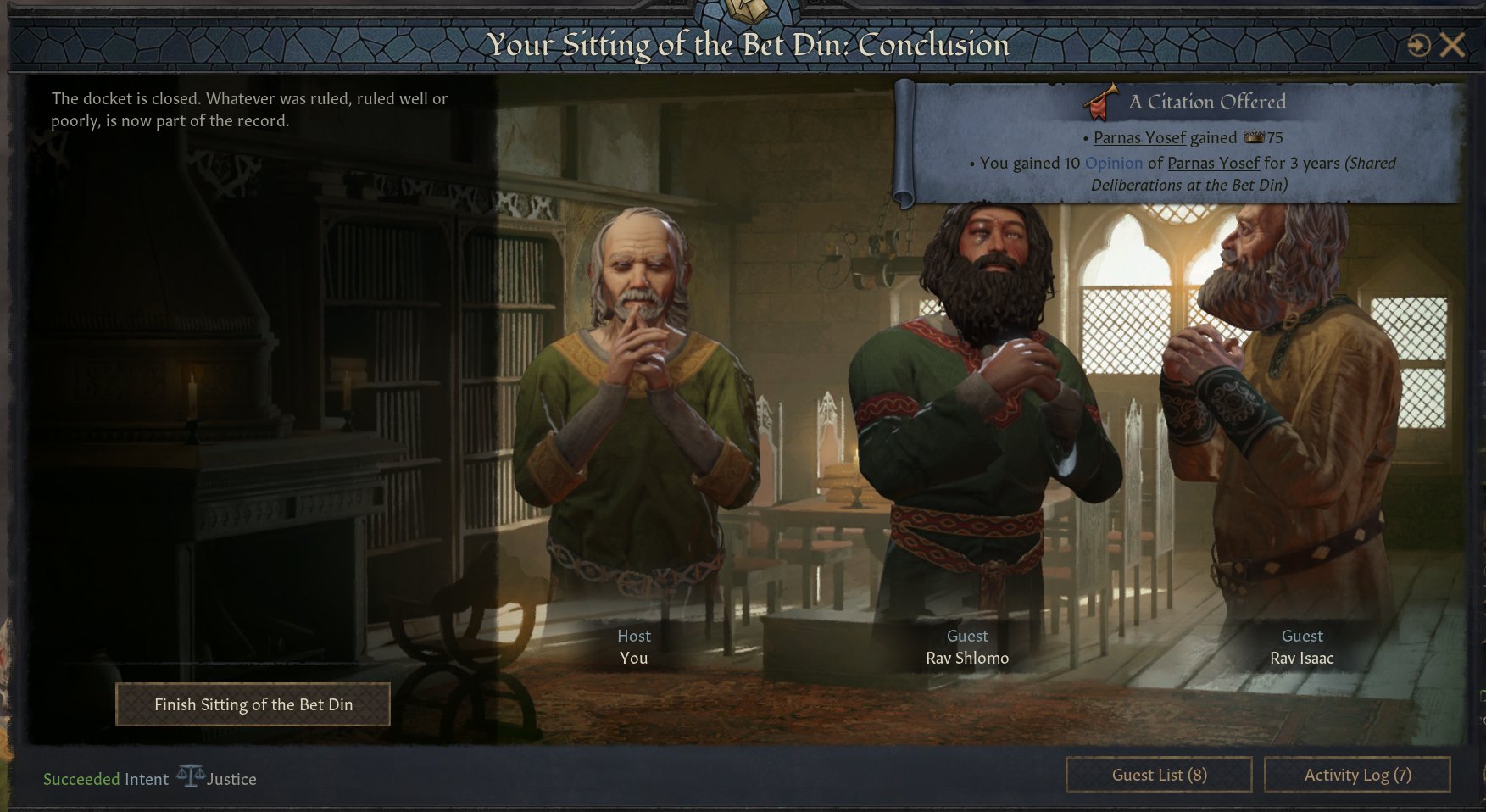
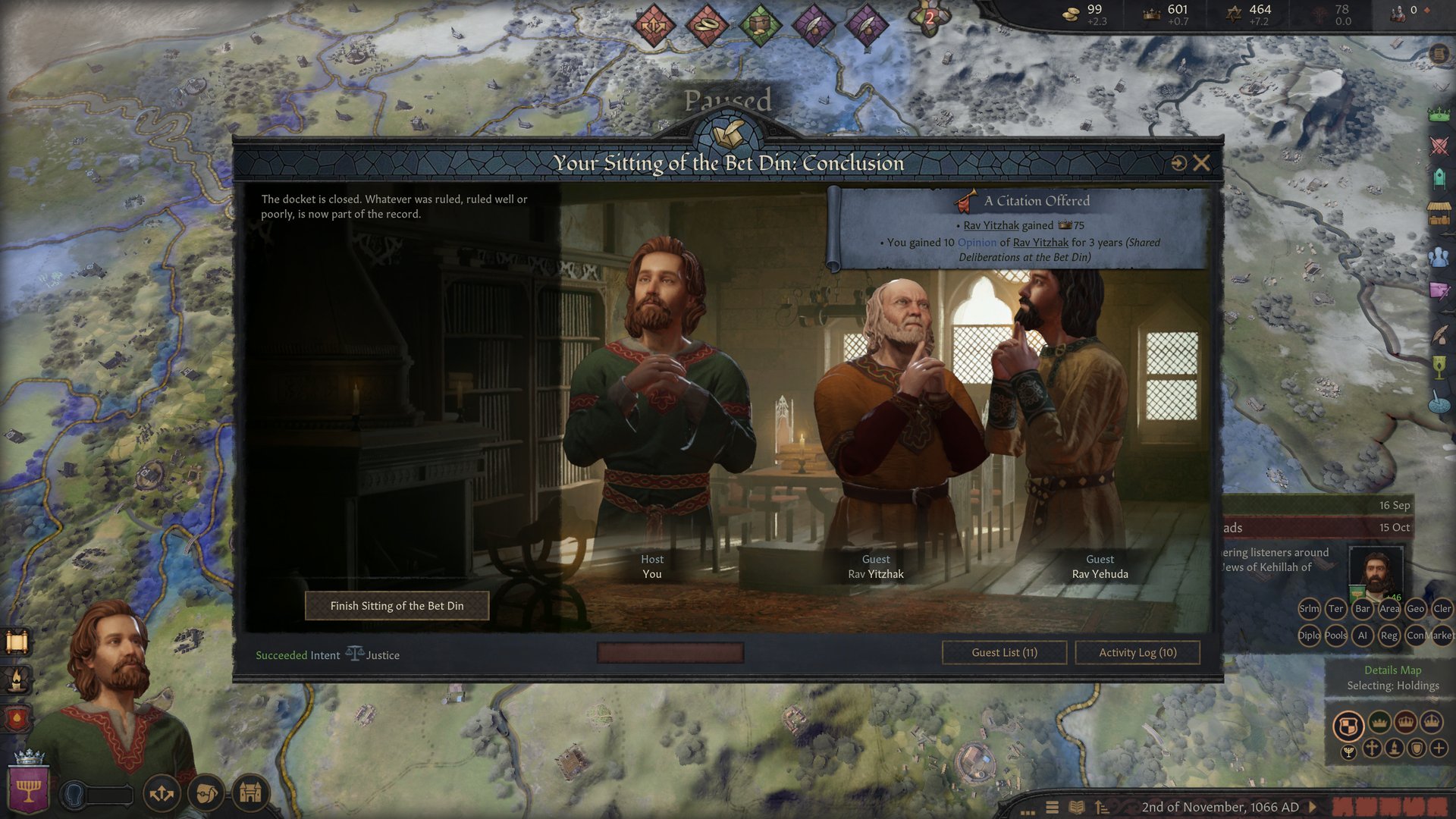
Ordained judges sit first, and a lay bench sits when none is available. Nearby sages are invited. Guests choose an intent, such as study or seeking ordination. A sitting ends with a conclusion that names its guests, any citation offered, and whether the host’s intent succeeded.
Ask beyond the community
A difficult question can become a she’elah sent to a scholar elsewhere, with a responsum connecting local law to the wider scholarly network. This makes distant relationships and learned correspondents useful even without political control over their communities.
Development status
A full sitting was played live on 26 November 2026, from Community Safety’s Host a Bet Din, through three cases, to the conclusion. That run logged many tooltip errors while the argument options were on screen, so a value that looks blank or wrong there may be a bug: please report it. The she’elah system replaced the old responsa letters in 0.2.0.