Rashi, Rav Shlomo ben Yitzhak, starts the 1066 bookmark at 26, at the head of the small Kehillah of Troyes. This page follows one development-build session in which he studies, sits as judge, and writes a commentary on the Talmud. The screenshots are from that session.
The community at the start
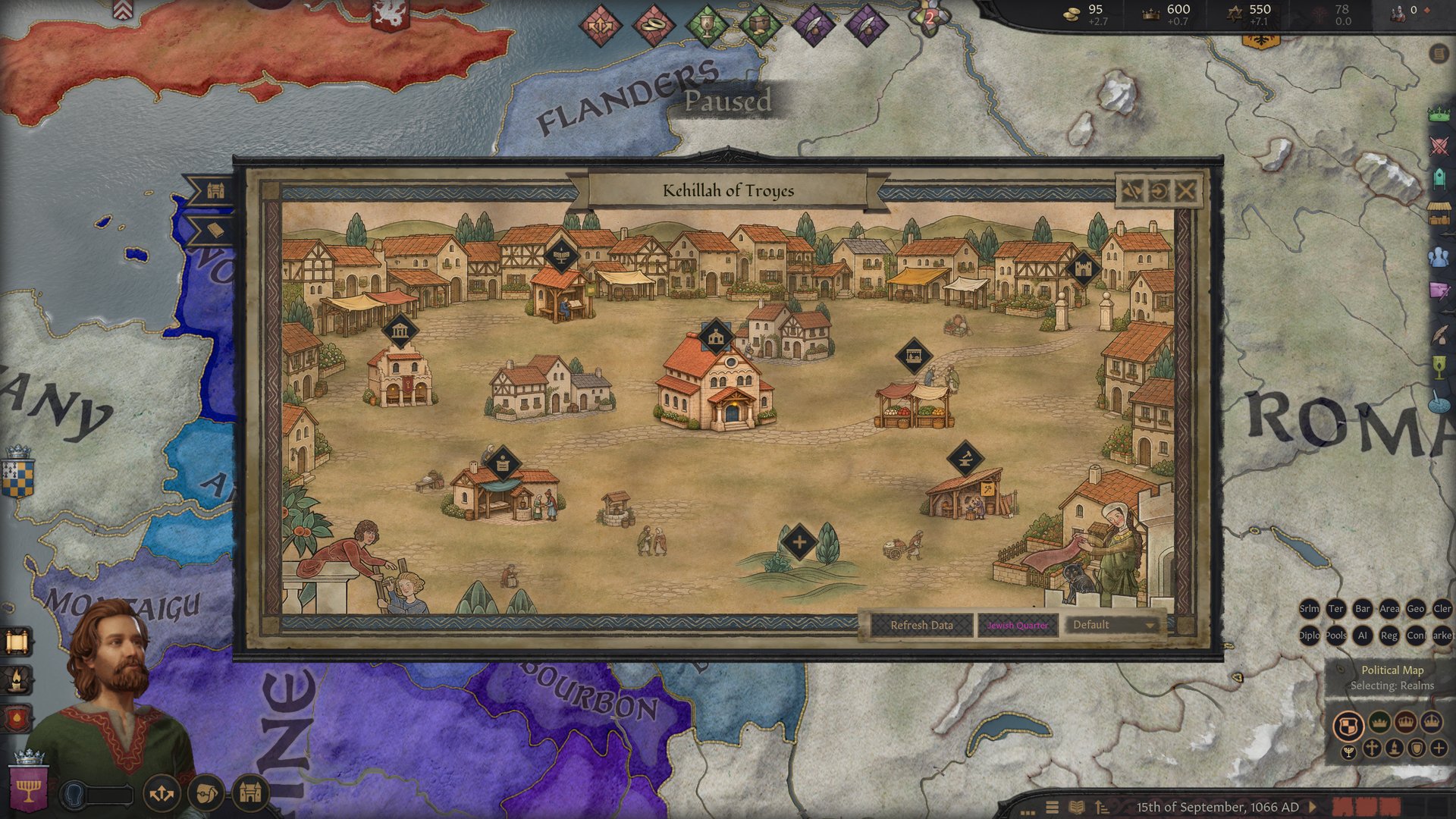
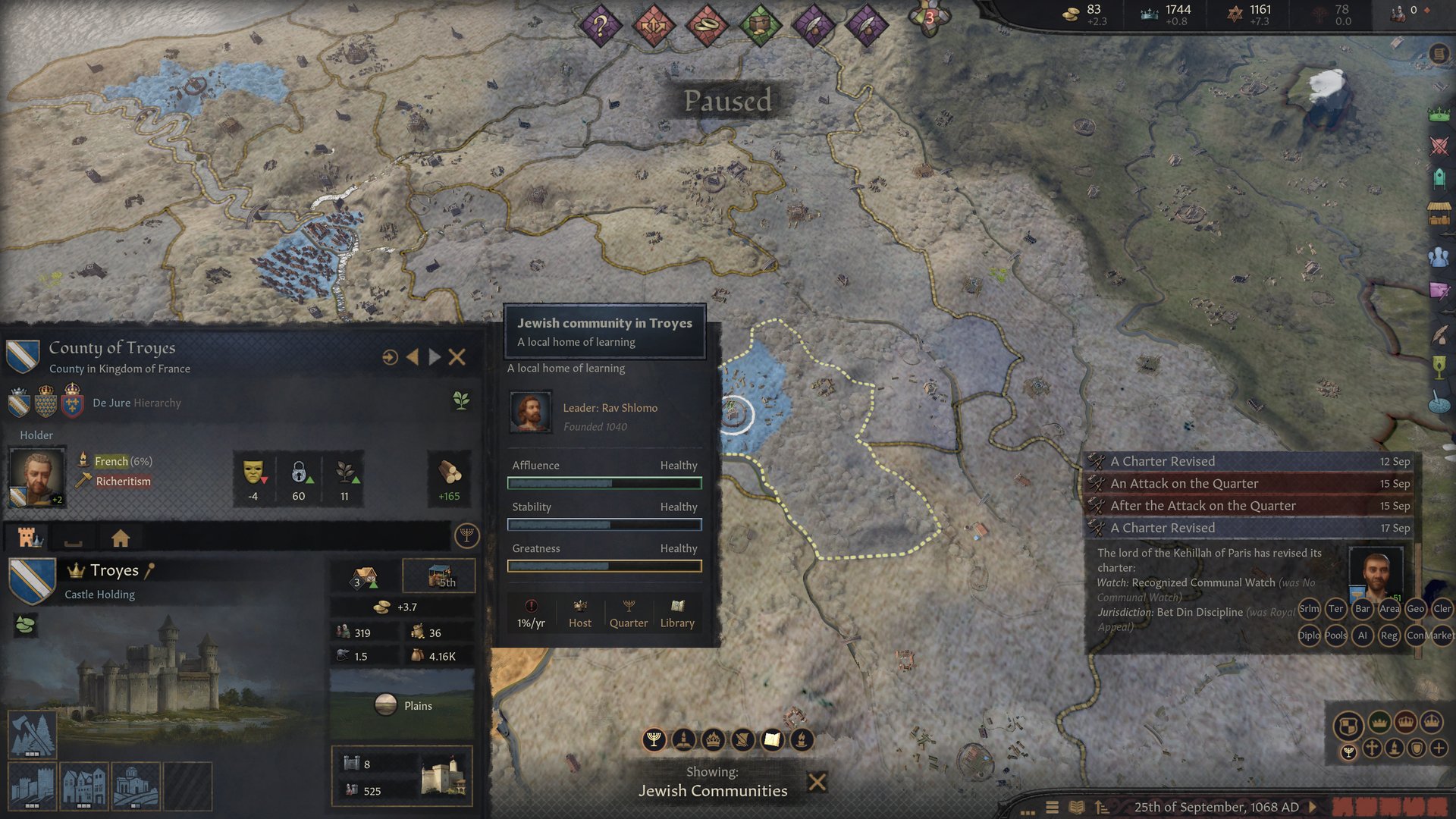
Open the Domain tab first. Troyes starts in good health: Affluence and Stability are Healthy, and danger is Calm. Greatness, the pillar a scholar cares about most, starts Strained. The bottom strip shows that the community lives under King Philippe, whose outlook is Indifferent.
The Laws tab shows the charter with the host. At the start it is Fair: free to build, no communal watch, appeal to the king, unrestricted study, and customary tribute. No leadership style has been chosen yet.
Books before writing
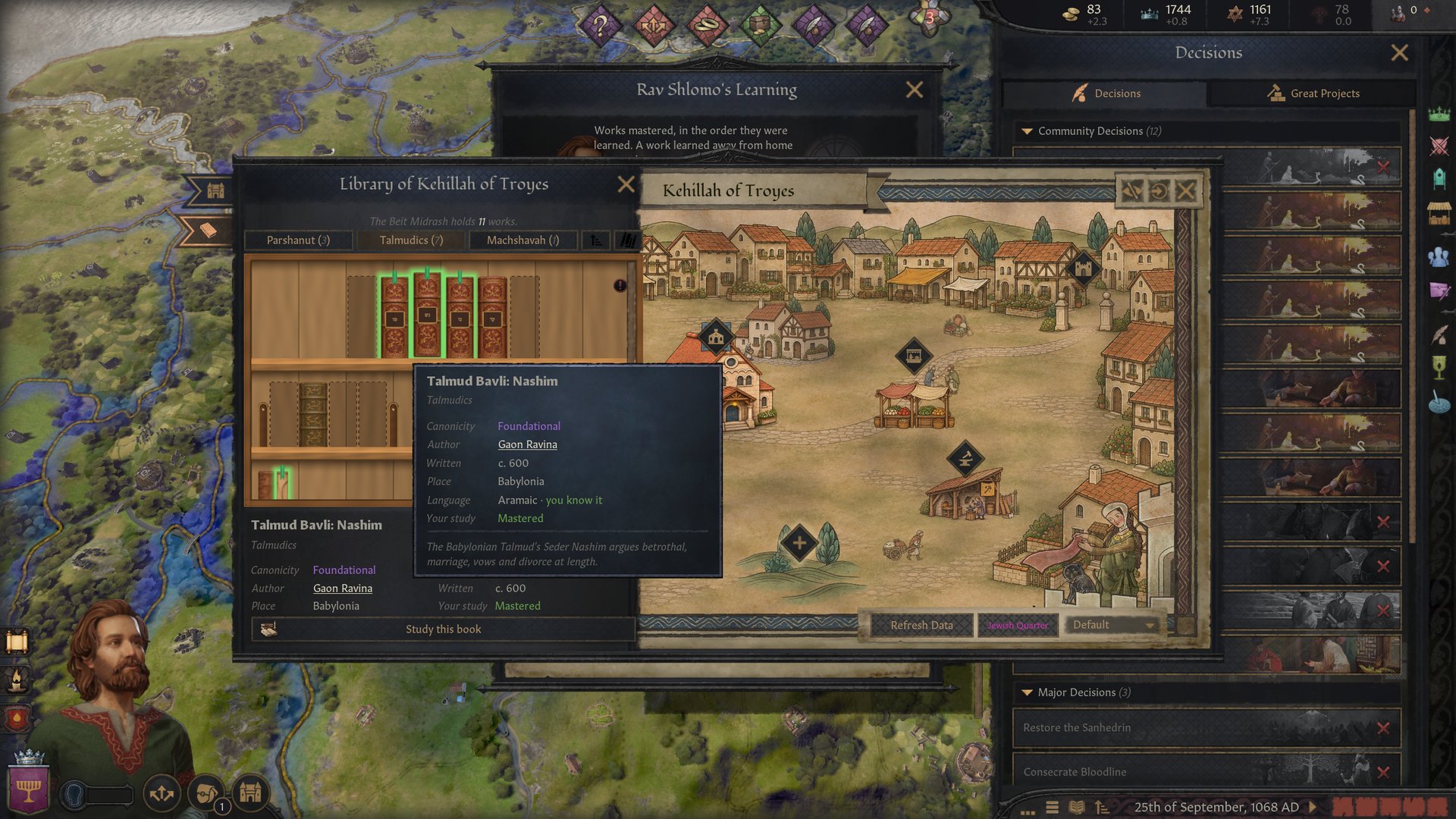
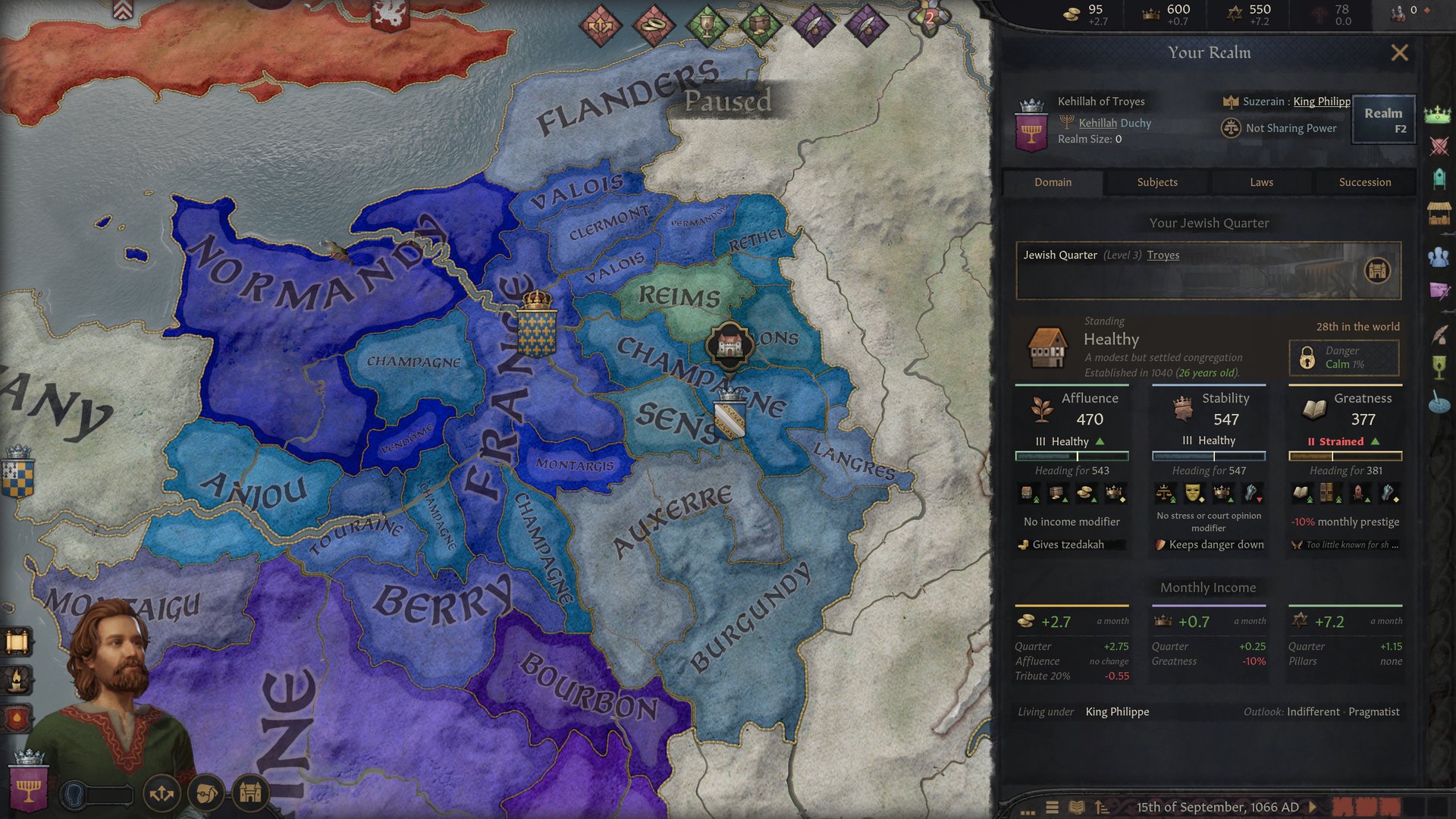
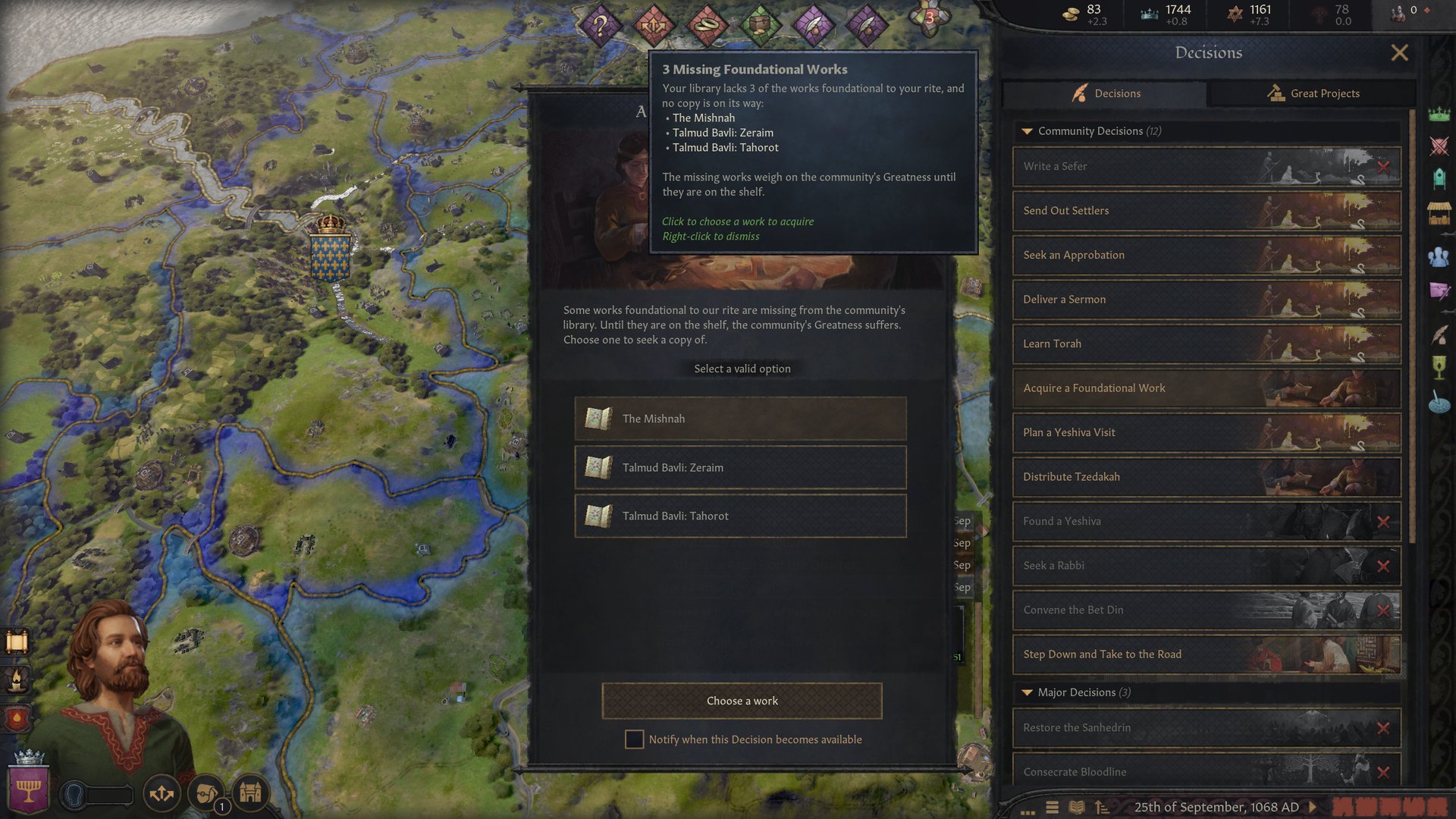
A writer needs a shelf and the learning to use it. Rashi's Learning window lists the works he has mastered, in the order he learned them. A top-bar notice warns that the library lacks works foundational to its rite, here the Mishnah and two orders of the Bavli. The lack weighs on Greatness. Clicking the notice opens Acquire a Foundational Work.
A sitting of the Bet Din
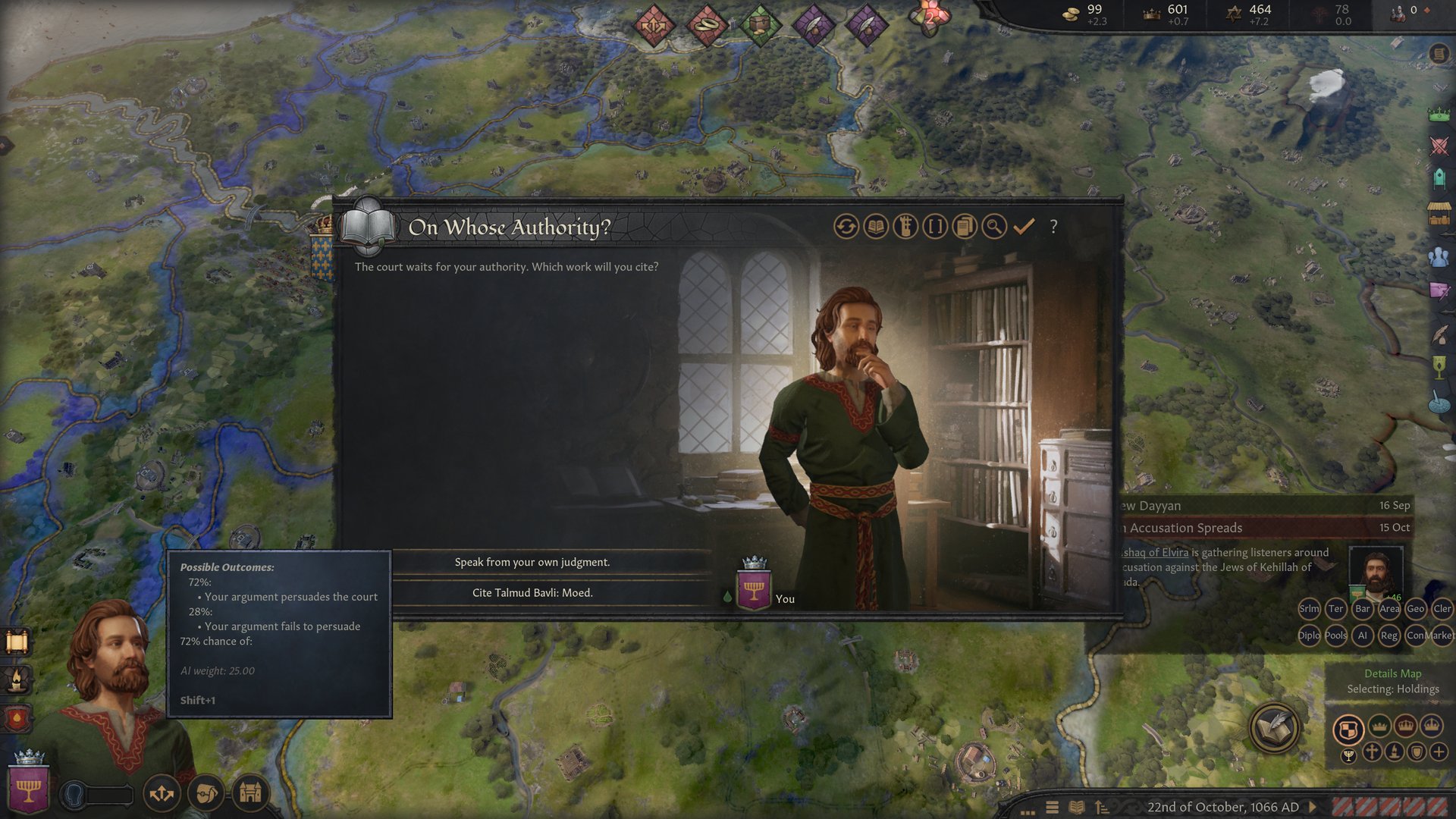
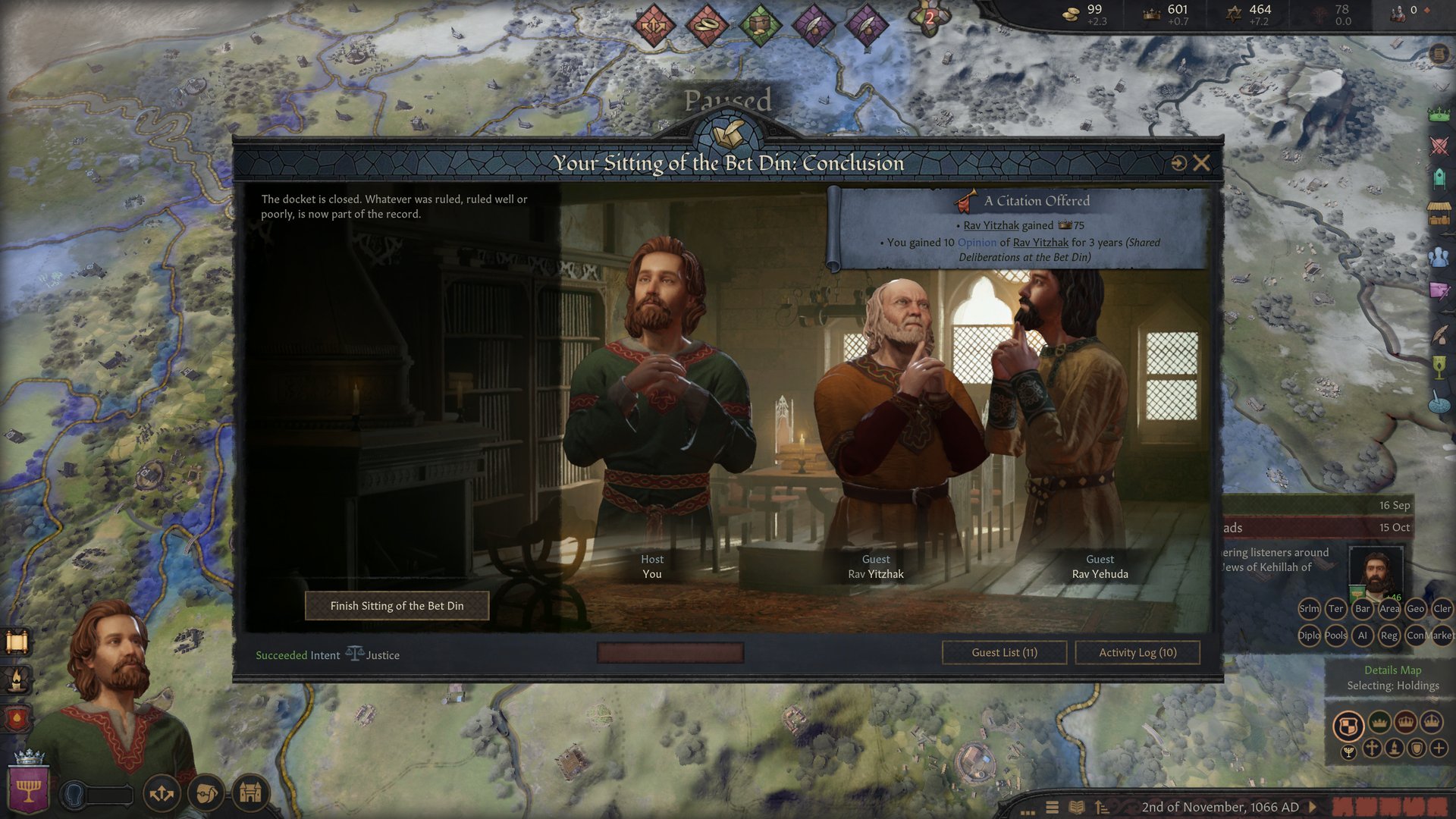
A scholar-leader is also the community's judge. Community Safety's Host a Bet Din opens the activity planner. In this sitting, Rashi heard three cases. In one, a shofar had cracked before a public service, and the court had to decide whether that service still counted.
Writing the commentary
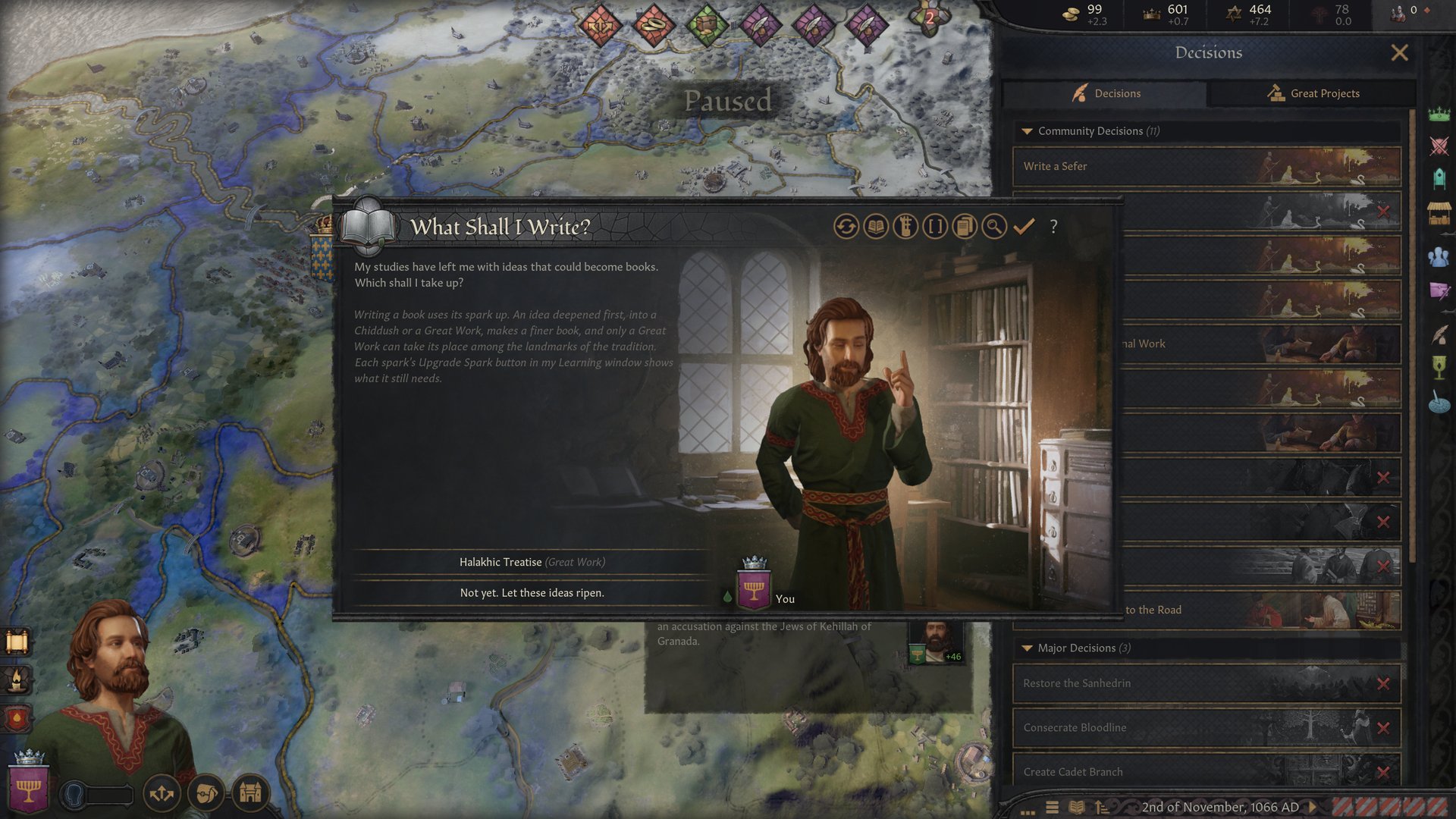
Writing begins with a spark, an idea that comes from mastering a book. Developed far enough, a Talmudics spark becomes a Great Work. Write a Sefer then asks what to write.
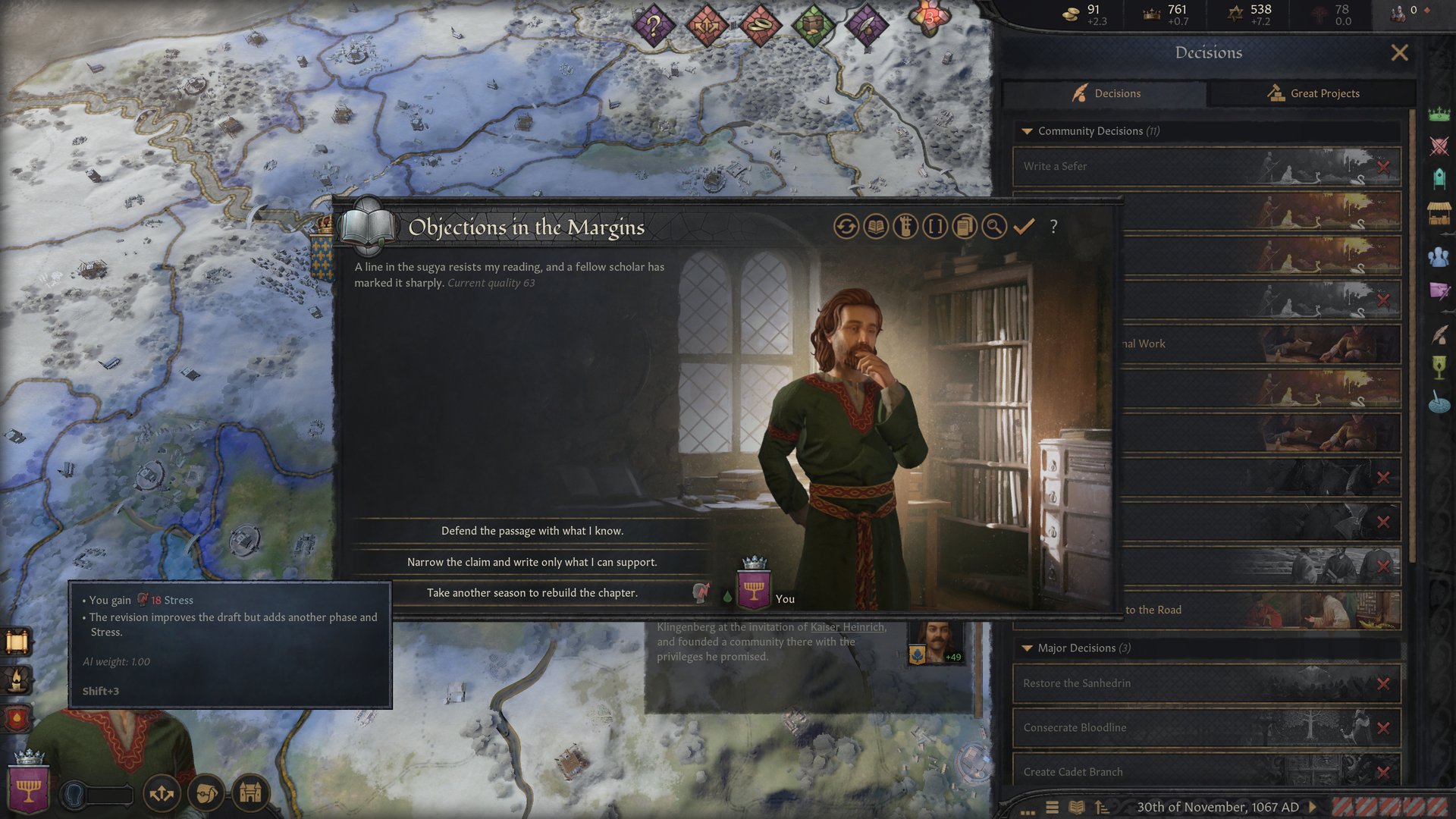
The writing ran from November 1066 to June 1068. Rashi gathered evidence with his chavrusa, Judah, and later had to answer a fellow scholar's objection. He could defend the passage, narrow the claim, or take another season to rebuild the chapter. Each option's tooltip gives its cost.
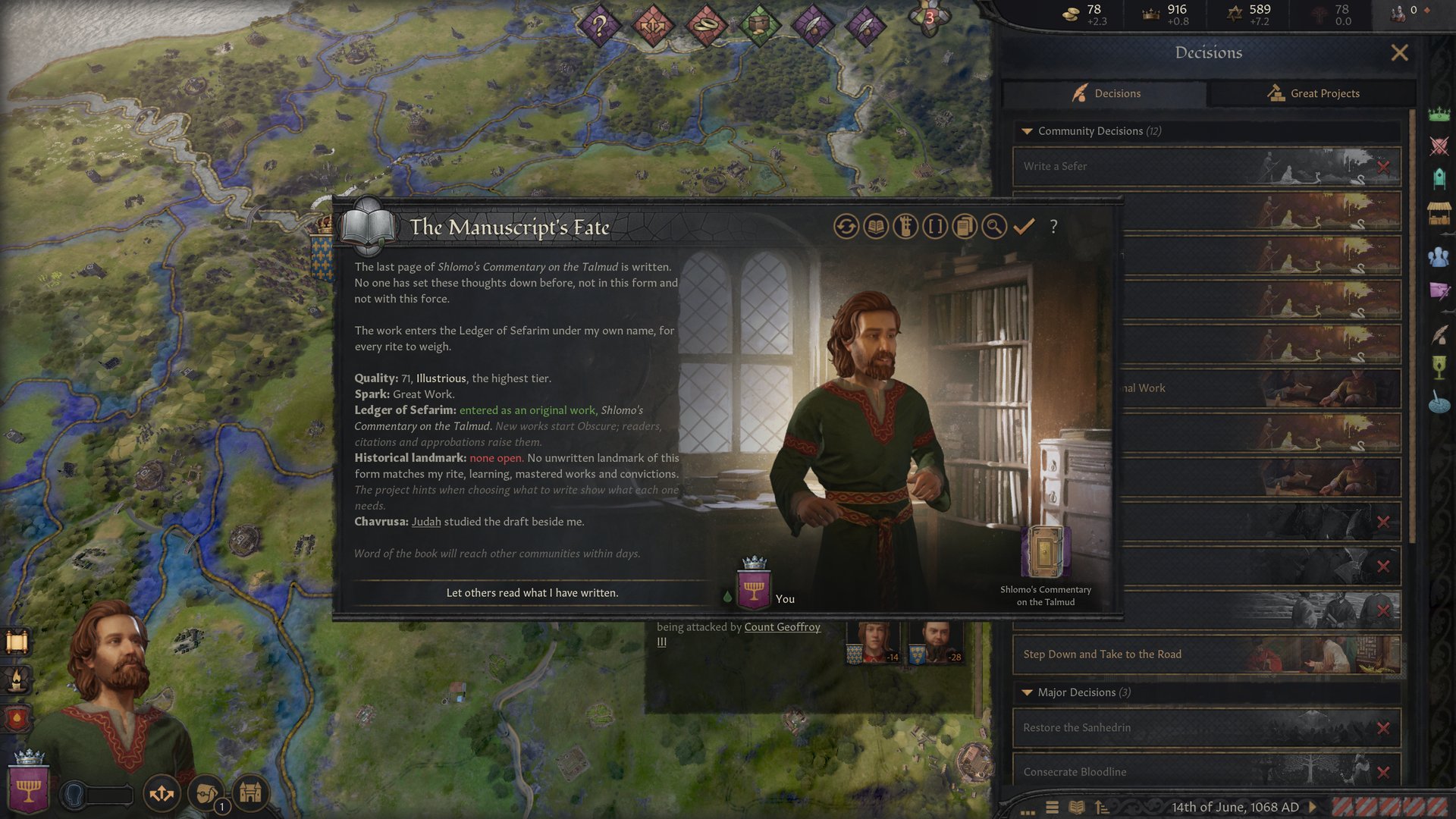
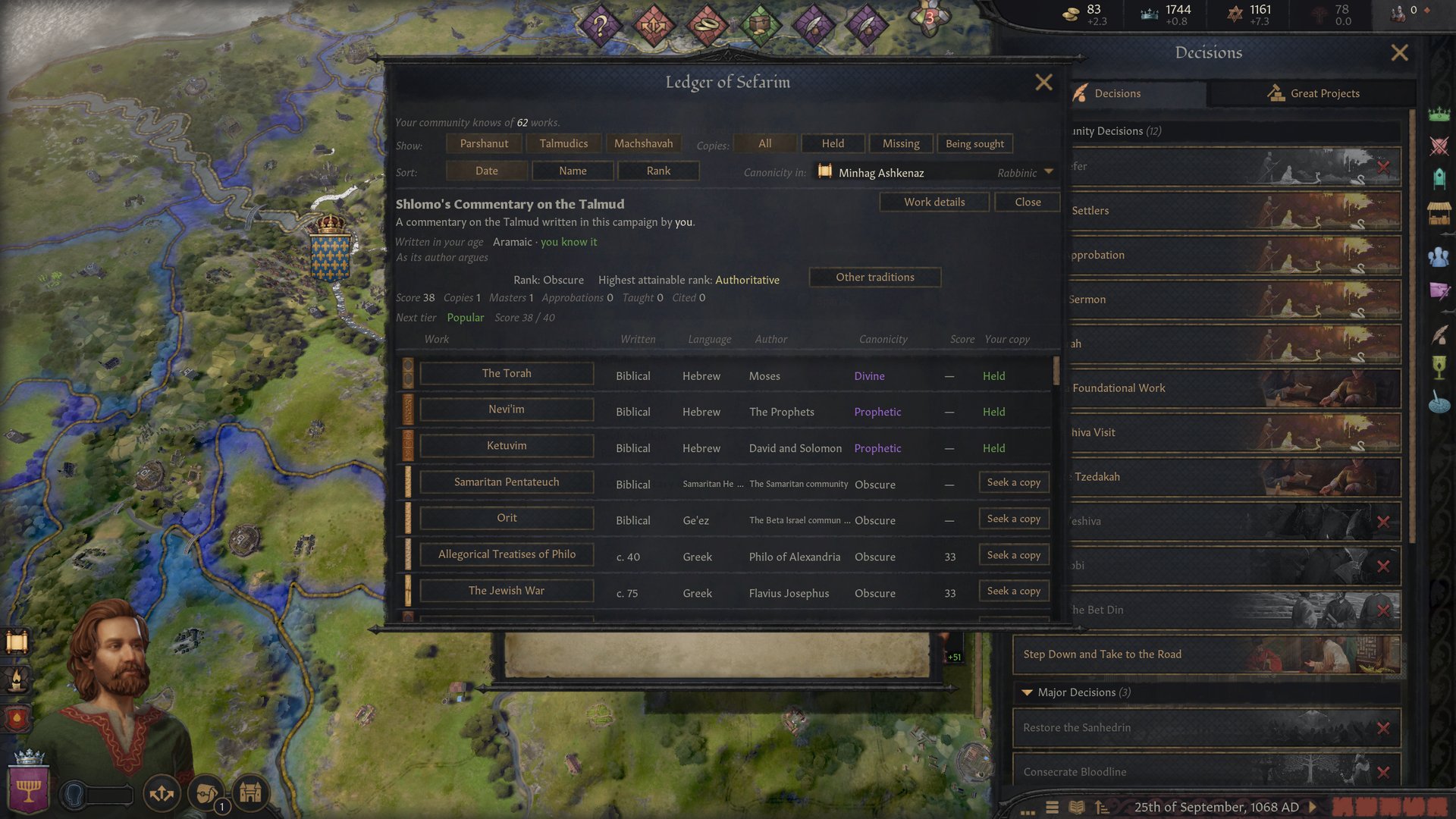
The new work enters the Ledger of Sefarim with one copy and one master, its author. Like every new work, it starts Obscure. Its quality placed it at 38 of the 40 points needed for Popular, and its rite could one day hold it Authoritative. Word of the book then spread to other communities.
Troyes on the map
About this session
This was a development build of 26 November 2026. To reach writing within one session, console debug events supplied the mastered Talmud orders and the Great Work spark, which normally come from years of study. Rashi's own historical commentary needs four orders of the Bavli mastered, and he had three, so the book was written as an original Great Work instead. See the writing guide for how the system is meant to work.